Cross Reactivity: How Your Body Can Still Think You Are Eating Gluten Even When You Are Gluten Free
I want people with celiac disease or non celiac gluten sensitivity to reverse the damage in their bodies, heal and to increase their health span. That's right, increase your health span, that is the time you are healthy while you are alive.
I don't recommend a 'gluten free' diet. Modern science as you will read below is demonstrating that there are dangers in eating grains and other foods. I recommend the modern version of the specific carbohydrate diet, called Gut and Psychology Syndrome (GAPS) way of eating. That's the beginning and the most strong foundation. Get help to source out complications and correct them; such as nutritional deficiencies, vitamin D deficiency, hormone imbalances, chronic infections, methylation issues which induce thrombophilia, and autoimmune disorders.
The basis of the GAPS protocol, is to avoid grains and other foods that trigger gluten reactions, called cross reactivity and other damage to the bowel. These foods to avoid include corn, soy, rice, oats, millet, tapioca, potatoes, dairy, instant coffee, yeast (brewers yeast, bakers yeast). This is only a partial list, and the full list can be found at www.gaps.me.
Damage from gluten free foods made with grains, legumes and others can come from:
-cross reactivity
-gluten reaction because of contamination
-allergic reactions- an elimination diet helps to identify which foods one is allergic to
- disaccharide content of these foods which encourage the growth of pathological microorganisms especially yeast which triggers gluten reactions.
-additives and different forms of anti nutrients present in grains and legumes. For example, Glyphosate made by GMO plants and sprayed on all grains and legumes, disturbs the Shikimate system of the microbiota and interfere with proper nutrition leading to for example sulfur deficiency and bowel damage.
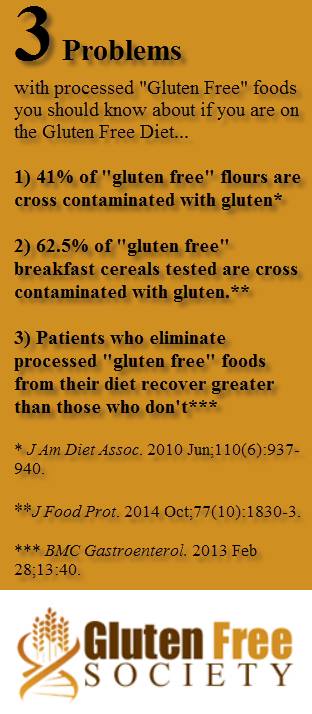
A common cause of gluten damage is eating a food with gluten contamination, up to 40% of gluten free cereals are contaminated with measurable amounts of gluten. Gluten free flours found to have a high rate of contamination include chickpea flour, buckwheat flour, white rice flour, millet, and soy flour. Many gluten free flours start off gluten free, but become contaminated in their processing.
The foods-to-avoid list then includes foods with too many disaccharides (like corn, tapioca and sweet potatoes), and foods that cause cross reactivity to gluten (like corn and potatoes).
Cross Reactivity of All Grains and Gluten Now Proven.
In this article I want to focus on cross-reactivity, a reaction to a food that does not have gluten in it, but it still triggers a gluten reaction. Here is a very good description of how and why many grains trigger a cross reactivity reaction from Dr. Sarah Ballantyne's blog "The Paleo Mom", - my bold.
For those 20% of us with celiac disease or gluten-intolerance/sensitivity (whether diagnosed or not) [I think this number is much higher as the threshold of the testing equipment to determine the levels of antibodies in the tested people, may not be able to pick up the smaller amounts, but these smaller amounts of antibodies are still active. If you have an autoimmune disease, it is my opinion you have the antibodies to gluten and the cross reactive foods], it is critical to understand the concept of gluten cross-reactivity. Essentially, when your body creates antibodies against gluten, those same antibodies also recognize proteins in other foods. When you eat those foods, even though they don’t contain gluten, your body reacts as though they do. You can do a fantastic job of remaining completely gluten-free but still suffer all of the symptoms of gluten consumption—because your body still thinks you are eating gluten. This is a very important piece of information that I was missing until recently.
Proteins are made of long chains of amino acids (small proteins may only be 50 amino acids long whereas large proteins may be 2000 amino acids long) and it is the specific sequence of these amino acids that determines what kind of protein is formed. These amino acid chains are folded, kinked and buckled in extremely complex ways, which gives a protein its ‘structure’. This folding/structure is integral to the function of the protein.

Proteins are made of amino acids hooked end-to-end like beads on a necklace.

To become active, proteins must twist and fold into their final, or "native," conformation."
An antibody is a Y shaped protein produced by immune cells in your body. Each tip of the Y contains the region of the antibody (called the paratope) that can bind to a specific sequence of amino acids (called the epitope) that are a part of the protein that the antibody recognizes/binds to (called the antigen). The classic analogy is that the antibody is like a lock and a 15-20 amino acid section of a protein/antigen is the key. There are 5 classes (or isotypes) of antibodies, each with distinctive functions in the body. The IgE class of antibodies are responsible for allergic reactions; for example, when someone goes into anaphylaxis after eating shellfish. The two classes IgG and IgA are critical for protecting us from invading pathogens but are also responsible for food sensitivities/intolerances. Both IgA and IgG antibodies are secreted by immune cells into the circulation, lymph, various fluids of the body (like saliva!) and tissues themselves. And both IgG and IgA antibodies are found in high concentrations in the tissues and fluids surrounding the gut (this is part of why the gut is considered our primary defense against infection).
The formation of antibodies against an antigen (whether this is an invading pathogen or a food) is an extremely complex process. When antibodies are being formed against a protein, the antibodies recognize specific (and short) sequences of amino acids in that protein. Depending on how the antigenic protein is folded, certain amino acid sequences in that protein are more likely to be the target of new antibody formation than others, simply because of the location of that sequence in the structure of the protein. Certain sequences of amino acids are more antigenic than others as well (i.e., more likely to stimulate antibody formation). This is also part of why certain foods have a higher potential to cause allergies and sensitivities.
Read the whole thing. Proteins look like a string of pearls, where by digestion, the string can be broken down into sets of one or more pearls, and can be recognized by the immune system as a different peptide ( a building block of a protein) such as dairy or corn fragments.
More than one study has shown gluten cross reactivity to all dairy products, information which may explain why you are not as healthy as you would like when you are strictly gluten free, but are still eating dairy. Try being truly dairy free for six months (gluten reaction damage lasts from 6 months to a year) and see what happens.
The study mentioned in the piece above uses alpha gliadin as the positive control to ascertain which foods cross react to alpha gliadin. The researchers made a list of foods which probably injure people with the abnormal autoimmune connective tissue reaction. But the list of foods to avoid to avoid internal injury is probably longer than the one mentioned in this article.To complicate the picture, foods can have other gliadin proteins in them such as gamma gliadin which are also thought to be triggering autoimmune disorders. From communication with Cyrex lab, the company that can test for cross reactivity: “The gluten associated cross reactive foods were only tested against alpha-gliadin-33, so in that regard we do not know if these foods cross react with any other gluten peptides (like gamma-gliadin). So the cross-reactive potential of Array 4 would currently only apply to an individual who has positive alpha-gliadin-33 antibodies. Although the article mainly addresses CD we would extrapolate the information to a person with NCGS with positive alpha-gliadin-33 antibodies who is refractory to a gluten-free diet.”
This suggests there could be more grains or other foods that trigger a gluten reaction and more research is required. A subject for another blog.
While not all people with gluten sensitivities will have gastrointestinal or other obvious signs that they are reacting to these foods listed in www.gaps.me or in the article, these foods stimulate parts of the immune system that are trying to protect you but in the process, harm you. You may not feel it, until you get a diagnosis. You have to link that diagnosis with the possibility your food is behind it.
We know in persons with celiac disease, trace amounts of gluten can cause a reaction, inflammation and immune responses ( antibodies attacking body parts like the thyroid or the balance system, called cerebellar ataxia) that can last up to one year. Can trace amounts of gluten cross reactive foods cause the same abnormal, autoimmune connective tissue reactions? Dr. Vojdani has shown just this and warns of the production of autoimmune disorders. "In the absence of the proper dietary elimination of gluten, the present study supports the hypothesis that if the high prevalence of antibodies against dietary proteins and peptides and their cross-reaction with various tissue antigens are not taken seriously, and if proper measures are not implemented, the result may be the development of autoimmunity in the future."
This is important when you decide to eat food you haven't prepared. Think of the small amounts of corn (citric acid, or ascorbic acid usually derived from corn) found is so many foods and supplements. Not to mention casein and other trace milk proteins in so many products like store bought pesto or butter. These foods can hurt you far beyond the gastrointestinal tract.
Here is the list of cross reactive foods from Dr. Ballantyne's investigations: (it may need to be updated with time, and your own experience with the food in question):
oats
all dairy
Yeast (brewer's. baker's, nutritional)
instant coffee (Nestle's unflavoured instant coffee are gluten free)
milk chocolate
millet
soy
corn
rice
potatoe
As mentioned above there are multiple mechanisms for inflammation and damage from eating certain foods, and cross reactivity is only one of the ways. The GAPS protocol has been researched and in use for healing gastrointestinal and extra gastrointestinal diseases for 80 years, starting as a specific carbohydrate protocol, and helps to manage the multiple ways food can injure especially the person with celiac disease. I recommend using the list provided at www.gaps.me. Add clean, pesticide free, unprocessed to the characteristics of your food choices and you should feel better.
To Your Health
Dr. Barbara (TM)
CeliacBrain (TM) is the trademark and copyright of Dr. Barbara Powell. The right of Dr. Barbara Powell to be identified as the author of this work has been asserted by her in accordance with the Copyright, Patent and Designs Act 1988.
References:
Illustrations of protein and protein folding: https://publications.nigms.nih.gov/structlife/chapter1.html
A. Vojdani and I. Tarash, “Cross–Reaction between Gliadin and Different Food and Tissue Antigens,” Food and Nutrition Sciences, Vol. 4 No. 1, 2013, pp. 20-32.http://www.scirp.org/journal/PaperInformation.aspx?PaperID=26626
Thompson T et al. Gluten contamination of grains, seeds, and flours in the United States: a pilot study.J Am Diet Assoc. 2010 Jun;110(6):937-40. doi: 10.1016/j.jada.2010.03.014.
In this article I want to focus on cross-reactivity, a reaction to a food that does not have gluten in it, but it still triggers a gluten reaction. Here is a very good description of how and why many grains trigger a cross reactivity reaction from Dr. Sarah Ballantyne's blog "The Paleo Mom", - my bold.
For those 20% of us with celiac disease or gluten-intolerance/sensitivity (whether diagnosed or not) [I think this number is much higher as the threshold of the testing equipment to determine the levels of antibodies in the tested people, may not be able to pick up the smaller amounts, but these smaller amounts of antibodies are still active. If you have an autoimmune disease, it is my opinion you have the antibodies to gluten and the cross reactive foods], it is critical to understand the concept of gluten cross-reactivity. Essentially, when your body creates antibodies against gluten, those same antibodies also recognize proteins in other foods. When you eat those foods, even though they don’t contain gluten, your body reacts as though they do. You can do a fantastic job of remaining completely gluten-free but still suffer all of the symptoms of gluten consumption—because your body still thinks you are eating gluten. This is a very important piece of information that I was missing until recently.
Proteins are made of long chains of amino acids (small proteins may only be 50 amino acids long whereas large proteins may be 2000 amino acids long) and it is the specific sequence of these amino acids that determines what kind of protein is formed. These amino acid chains are folded, kinked and buckled in extremely complex ways, which gives a protein its ‘structure’. This folding/structure is integral to the function of the protein.
Proteins are made of amino acids hooked end-to-end like beads on a necklace.
To become active, proteins must twist and fold into their final, or "native," conformation."
An antibody is a Y shaped protein produced by immune cells in your body. Each tip of the Y contains the region of the antibody (called the paratope) that can bind to a specific sequence of amino acids (called the epitope) that are a part of the protein that the antibody recognizes/binds to (called the antigen). The classic analogy is that the antibody is like a lock and a 15-20 amino acid section of a protein/antigen is the key. There are 5 classes (or isotypes) of antibodies, each with distinctive functions in the body. The IgE class of antibodies are responsible for allergic reactions; for example, when someone goes into anaphylaxis after eating shellfish. The two classes IgG and IgA are critical for protecting us from invading pathogens but are also responsible for food sensitivities/intolerances. Both IgA and IgG antibodies are secreted by immune cells into the circulation, lymph, various fluids of the body (like saliva!) and tissues themselves. And both IgG and IgA antibodies are found in high concentrations in the tissues and fluids surrounding the gut (this is part of why the gut is considered our primary defense against infection).
The formation of antibodies against an antigen (whether this is an invading pathogen or a food) is an extremely complex process. When antibodies are being formed against a protein, the antibodies recognize specific (and short) sequences of amino acids in that protein. Depending on how the antigenic protein is folded, certain amino acid sequences in that protein are more likely to be the target of new antibody formation than others, simply because of the location of that sequence in the structure of the protein. Certain sequences of amino acids are more antigenic than others as well (i.e., more likely to stimulate antibody formation). This is also part of why certain foods have a higher potential to cause allergies and sensitivities.
Read the whole thing. Proteins look like a string of pearls, where by digestion, the string can be broken down into sets of one or more pearls, and can be recognized by the immune system as a different peptide ( a building block of a protein) such as dairy or corn fragments.
More than one study has shown gluten cross reactivity to all dairy products, information which may explain why you are not as healthy as you would like when you are strictly gluten free, but are still eating dairy. Try being truly dairy free for six months (gluten reaction damage lasts from 6 months to a year) and see what happens.
The study mentioned in the piece above uses alpha gliadin as the positive control to ascertain which foods cross react to alpha gliadin. The researchers made a list of foods which probably injure people with the abnormal autoimmune connective tissue reaction. But the list of foods to avoid to avoid internal injury is probably longer than the one mentioned in this article.To complicate the picture, foods can have other gliadin proteins in them such as gamma gliadin which are also thought to be triggering autoimmune disorders. From communication with Cyrex lab, the company that can test for cross reactivity: “The gluten associated cross reactive foods were only tested against alpha-gliadin-33, so in that regard we do not know if these foods cross react with any other gluten peptides (like gamma-gliadin). So the cross-reactive potential of Array 4 would currently only apply to an individual who has positive alpha-gliadin-33 antibodies. Although the article mainly addresses CD we would extrapolate the information to a person with NCGS with positive alpha-gliadin-33 antibodies who is refractory to a gluten-free diet.”
This suggests there could be more grains or other foods that trigger a gluten reaction and more research is required. A subject for another blog.
While not all people with gluten sensitivities will have gastrointestinal or other obvious signs that they are reacting to these foods listed in www.gaps.me or in the article, these foods stimulate parts of the immune system that are trying to protect you but in the process, harm you. You may not feel it, until you get a diagnosis. You have to link that diagnosis with the possibility your food is behind it.
We know in persons with celiac disease, trace amounts of gluten can cause a reaction, inflammation and immune responses ( antibodies attacking body parts like the thyroid or the balance system, called cerebellar ataxia) that can last up to one year. Can trace amounts of gluten cross reactive foods cause the same abnormal, autoimmune connective tissue reactions? Dr. Vojdani has shown just this and warns of the production of autoimmune disorders. "In the absence of the proper dietary elimination of gluten, the present study supports the hypothesis that if the high prevalence of antibodies against dietary proteins and peptides and their cross-reaction with various tissue antigens are not taken seriously, and if proper measures are not implemented, the result may be the development of autoimmunity in the future."
This is important when you decide to eat food you haven't prepared. Think of the small amounts of corn (citric acid, or ascorbic acid usually derived from corn) found is so many foods and supplements. Not to mention casein and other trace milk proteins in so many products like store bought pesto or butter. These foods can hurt you far beyond the gastrointestinal tract.
Here is the list of cross reactive foods from Dr. Ballantyne's investigations: (it may need to be updated with time, and your own experience with the food in question):
oats
all dairy
Yeast (brewer's. baker's, nutritional)
instant coffee (Nestle's unflavoured instant coffee are gluten free)
milk chocolate
millet
soy
corn
rice
potatoe
As mentioned above there are multiple mechanisms for inflammation and damage from eating certain foods, and cross reactivity is only one of the ways. The GAPS protocol has been researched and in use for healing gastrointestinal and extra gastrointestinal diseases for 80 years, starting as a specific carbohydrate protocol, and helps to manage the multiple ways food can injure especially the person with celiac disease. I recommend using the list provided at www.gaps.me. Add clean, pesticide free, unprocessed to the characteristics of your food choices and you should feel better.
To Your Health
Dr. Barbara (TM)
CeliacBrain (TM) is the trademark and copyright of Dr. Barbara Powell. The right of Dr. Barbara Powell to be identified as the author of this work has been asserted by her in accordance with the Copyright, Patent and Designs Act 1988.
References:
Illustrations of protein and protein folding: https://publications.nigms.nih.gov/structlife/chapter1.html
A. Vojdani and I. Tarash, “Cross–Reaction between Gliadin and Different Food and Tissue Antigens,” Food and Nutrition Sciences, Vol. 4 No. 1, 2013, pp. 20-32.http://www.scirp.org/journal/PaperInformation.aspx?PaperID=26626
Thompson T et al. Gluten contamination of grains, seeds, and flours in the United States: a pilot study.J Am Diet Assoc. 2010 Jun;110(6):937-40. doi: 10.1016/j.jada.2010.03.014.