Wednesday, September 12, 2012

Carrageenan is a likely Human Carcinogen – Avoid


As a person with gluten sensitivity or celiac disease and you find your bowel is not healing as it should, or you’ve just been told you have another bowel disease like Crohn’s or colon cancer, even with a GAPS diet and avoiding the other foods you may be allergic too. The cause of your problems may be a common food additive called Carrageenan. 

Carrageenan is so toxic and inflaming to the human digestive system that this food additive is formally classified by the International Agency for Research on Cancer (part of the World Health Organization) as a potential human carcinogen.
If you drink dairy substitutes like soy milk, hemp milk, almond milk, or coconut milk, you may be exposed to it, even if they say they are organic.

The Healthy Home economist writes a very informative piece on the subject:

Based on these assumptions, consumers would likely be surprised and even shocked to learn that a likely human carcinogen that triggers massive gastrointestinal inflammation and symptoms in many people continues to be allowed by the National Organics Standards Board (NOSB) for inclusion on the list of ingredients permitted in certified organic food – food bearing the USDA Organic label!

This dangerous ingredient, carrageenan, which most consumers are unaware is lurking in so many of their beloved organic products, seems harmless enough at first glance. Derived from seaweed, carrageenan is a highly processed food additive that has no nutritional function whatsoever.

What it does do is act as a fat replacer or stabilizer in certain types of dairy products, dairy substitutes like soy milk, coconut milk, hemp milk, almond milk, and other processed foods.

As you can see, buying lowfat is not a good idea and not just for the fact that you are losing the valuable whole fats that satiates and steadies the blood sugar. By opting for low-fat or alternative dairy products, consumers are choosing instead to consume a toxic additive that is a likely carcinogen!

Even Dr. Andrew Weil has been telling people to avoid carrageenan since 2002. Carrageenan is so toxic and inflaming to the human digestive system that this food additive is formally classified by the International Agency for Research on Cancer (part of the World Health Organization) as a potential human carcinogen. Scientists first discovered that carrageenan causes gut inflammation as far back as the 1960′s. Inflammation is a very serious condition as it is a primary symptom in IBS, Crohn’s Disease, ulcerative colitis, and colon cancer as well as dozens of other diseases.

Read more at The Healthy Home Economist.com.

And go here to Sarah’s other link to learn to easily make healthy non-dairy beverages at home that are carrageenan free.


To Your health
Dr. Barbara


Wednesday, August 29, 2012

Dairy-free Probiotic for Pennies a Day! Water Kefir


I've been enjoying a cool and refreshing drink this summer, called water kefir and sometimes called Ginger Beer. There's not alcohol in it, but there are some powerful probiotics.


Here is what Mike Adams from Natural News says about Water Kefir and its health benefits:
Probiotics are living microorganisms that have been found to provide many health benefits. Benefits include boosting immunity, lowering cholesterol and blood pressure, preventing colon cancer, preventing irritable bowel syndrome and colitis, and reducing inflammation. Although yogurt is usually the first probiotic food to come to mind, water kefir is an excellent, dairy-free way to get in more probiotics without much expense. In fact, water kefir is one of the top ten dairy-free probiotics available today.

Kefir water is made using special water kefir grains through a simple fermentation process. The resulting liquid is slightly fizzy, similar to soda pop. Many people are able to finally break free from the soda habit by replacing it with water kefir and getting the added benefits of probiotics!


Learn more: http://www.naturalnews.com/031633_probiotics_kefir.html#ixzz23YcXT6aa

There are a lot of comparisons between yogurt and kefir. Kefir, however, is considered the probiotic powerhouse for several reasons. Yogurt provides several strains of beneficial bacteria that benefit the gut. Kefir has a much wider variety of beneficial bacteria that have a more potent effect on the GI system and mucous membranes of the body.


I hope you enjoy making your own water kefir, it’s really easy to do.

WATER KEFIR (Ginger Beer)

Add these ingredients to a spotlessly clean 2L jar. 
Alter to suit volume of grains given:


3 cups filtered water or well water (tap water will kill the grains)
¼ cup water kefir grains
¼ cup maple syrup or raw sugar (I have used Palm sugar (organic) 2 lg. tbsp.)
A knob of fresh ginger sliced
½ slice of lemon
1 dried fig (to introduce beneficial bacteria)


If and when you wish to increase the quantity of grains add these as well:

½ teaspoon baking soda and 1 cm square of egg shell boiled and rushed (or 1 tsp/ molasses)

Seal jar airtight and let stand for 2 days at room temperature. Stir contents after 24 hours and again a few times when possible thereafter. Strain liquid water-kefir and store in airtight sealable bottles. Best enjoyed chilled after 1-2 days refrigeration. This increases carbonation to give a nice refreshing fizzy ginger root-beer.

Try storing the sealed bottle at room temperature for one day before refrigeration. This should increase fizz and reduce sugar content faster than fridge storage.
Sometimes the grains rapidly increase in quantity. Initially it might take more than 2 days for the water kefir to be ready, but in no time you’ll have plenty of grains and be giving ginger beer and water kefir grains to your friends and family.

How to keep the kefir alive while away
All you need to do is sit the kefir grains in a container with some of the kefir liquid and store in the fridge. This is called “putting them to sleep”. After that it may take a couple of batches for its fermenting power to get back to normal, but that is all. They won’t die, just lose a little fermenting power, but can be nurtured back again.

Thanks to Roxanne at Dr. Robert Kidd's office for supplying a starter kit of granules for me. 


Thursday, August 23, 2012

How to Subscribe to Dr. Powell’s Blog through Email Notifications


I would like to make it more convenient for you to see any new entries in a timely way.

If you would like to automatically receive my next blog entry, I suggest you subscribe to my blog by email.

You can subscribe by these two easy steps:
2. Type in your email where it says ‘Follow by Email’ (on the right of the page).

You should receive a new blog entry in your email automatically.

I hope you choose this method to take charge of your health and get informed about pertinent, up-to-date information regarding gluten sensitivity and celiac disease.

Yours in health,

Dr. Barbara Powell

Monday, August 20, 2012

Trying to Lose Weight- Try This Blog Whole30


Here is a very interesting blog which is also GAPS. It encourages healthy eating and it’s called Whole30.
A thirty day plan!!

I like it.

Monday, July 9, 2012

No coffee! Help! I Need a Morning Pick Me Up!


caffeine crystal

I love the taste of a good cup of coffee. And when I don't get to drink it or if I smell it, I crave coffee.
But I am resigned to the fact that I can't drink coffee without suffering some serious effect : inflammation, rebound exhaustion, stimulation of the gluten cross reactivity and possibly making new autoimmune diseases or at least making any existing autoimmune disorder worse.
A recent report showed cross reactivity of coffee and gluten in those persons who are sensitive to gluten (people with celiac or non- celiac gluten sensitivity). I recommend trying to eliminate coffee and coffee products if one has any symptoms or signs of inflammation, no matter how small.
And then there is the problem of caffeine....This is a picture of caffeine. Caffeine is made by plants to protect themselves from predators. Hmmmm? It's a natural pesticide.  Find out more at A Visual View of Caffeine.

What is one to do without coffee? Here are some pointers from The Healthy Home Economist:

Help! I Need a Morning Pick Me UP!

What if you really need a morning or afternoon pick me up and are truly concerned about the effect of coffee or tea on your adrenal and overall hormone health?
You can go the decaf route, but decaf coffee and tea still have caffeine in them and so will not eliminate the stress on the adrenals completely.
16oz of Starbucks Decaf, for example, contains about 25 mg of caffeine which is about the same amount as 8 oz of regular green tea.
Even decaf black tea has up to 12 mg of caffeine per 8 oz.
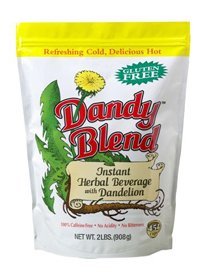
One option for a completely caffeine free morning brew is Dandy Blend, made of dandelion root.   I know plenty of folks who just love Dandy Blend and swear it tastes just like coffee, but if you choose to give it a try – go slow and build up gradually.   I’ve had some people report that the detoxifying effect of the dandelion can result in a close relationship with the bathroom until your digestive tract adjusts!

Another option is to make a coffee substitute yourself: The following recipe is suggested by Sally Fallon Morell, President of the Weston A. Price Foundation who recommends it as a good pick me up:

Coffee Substitute
1 Tbl Molasses
1 Tbl Coconut oil
Place ingredients in a mug and pour in boiling water and stir. Let coook until still hot but drinkable and enjoy!

I have survived not drinking coffee, and I have even thrived. I have some wonderful, stimulating non-caffeinated teas like Rooibos, cherry and raspberry tea.
 And water Kefir!!!
Enjoy exploring the world of teas.

Tuesday, June 19, 2012

“The 7 Day Back Pain Cure”.


Many healthcare practitioners recognize that food sensitivities, but especially gluten sensitivity trigger inflammation and inflammation can sometimes present as pain.  The connection is clear. And so many healthcare practitioners recommend eliminating wheat from the diet with great results.
Today I was asked if a person could cure celiac/gluten sensitivity with a gluten-free diet. Maybe once, but I don’t think it is possible in our environment. The problem is that once the body makes anti-bodies to gliadin, or one’s own tissues, the body doesn’t forget. It’s always ready and watching for a “triggering protein poly peptide”. Candida is very common trigger but so is coffee which can cross react. And, as noted below, 5% of modern wheat polypeptides are completely unique and not like any ancient wheat, and they are responsible for triggering reactions. And the body doesn’t forget, probably from multiple reasons such as toxic overload, chemical exposure, Electromagnetic field exposure, chronic infections, and nutritional deficiencies such as vitamin A deficiencies. One would have a reaction from eating wheat even if you can get a hold of heritage wheat flour (not the hybrid wheat strains).
If you have pain, try a Gut and Psychology syndrome diet with the supplements listed in the book and see if you don’t feel better. And add a supplement called GLA at 600 mg a day .
The following is a quote from Isabel De Los Rios at Beyond Diet, who recommends the book “The 7 Day Back Pain Cure”.
A lot of what I’ve learned about tackling inflammation and pain I learned from Jesse Cannone’s free book, "The 7 Day Back Pain Cure." Particularly, be sure to read Chapter 8: The Diet: How Dietary Imbalances Cause Pain.

"If I had to choose just 1 thing to do right now to help reduce your inflammation it would be to greatly reduce your wheat and gluten intake." Eliminating wheat from your diet can have an astounding impact on how you look and feel.

Wheat wasn’t always so harmful like it is today. In the past, we had many different strains of wheat, but in modern times, in order to increase production, agricultural scientists created two hybrid strains. Right now more than 99% of the wheat grown worldwide comes from those two hybrid crops. Genetically modified foods in any form can have an extremely negative impact on our health and weight.  Dr. William Davis, a Wisconsin based cardiologist, points out that the hybrid wheat strain shows only 95% of the same proteins as its parent wheat strains: the other 5% are completely unique. This unique 5% of proteins is responsible for so many people’s wheat sensitivities.  It’s becoming a huge epidemic and 
most everyone is allergic or sensitive to wheat in some form. Is that a scary thought or what?

In tomorrow’s newsletter, I will be addressing the easiest ways to eliminate wheat from your eating plan and the easy and delicious substitutions you have to choose from. Until then, make sure to get your free copy of 
"The 7 Day Back Pain Cure." It is a wonderful book to have on your bookshelf and I use it almost every week as one of my favorite reference books.
Your personal copy of "The 7 Day Back Pain Cure"


Isabel De Los Rios
Certified Nutritionist
Certified Exercise Specialist

Friday, June 1, 2012

CENTER FOR CELIAC RESEARCH AND DR. FASANO ON DOMINO’S PIZZA

There has been a lot of press lately about Domino's Gluten free pizza. According to the company's statement, Domino's found that while the crust is certified as gluten free, current store operations at Domino's
can not guarantee that each hand crafted pizza is gluten free.

The Center for Celiac Research at the University of Maryland, lead by Dr. Fasano MD, has issued a paper on this subject on May 11, 2012. Read below or click here. 

CENTER FOR CELIAC RESEARCH STATEMENT ON DOMINO’S PIZZA


Friday, May 11, 2012
On May 7th, Domino’s Pizza began selling a new product the company describes as: “Domino’s pizza made with a gluten-free crust.” The launch of this new product into the U.S. market has generated some confusion, particularly in the celiac disease community, about the safety of this product for people with gluten-related disorders. According to the company’s statement, Domino’s found that while the crust is certified as gluten-free, current store operations at Domino’s cannot guarantee that each handcrafted pizza will be completely free from gluten. The Center for Celiac Research has been asked its position on the matter, and hopes to alleviate some confusion with this statement.

While the development of safe gluten-free products and safe dining establishments is always a welcome advance, we do not have the confidence that this product meets the safety standards we recommend for our patients. The introduction of cross contamination from a large chain like Domino’s represents a threat to our patients affected by gluten-related disorders, including celiac disease, gluten sensitivity, dermatitis herpetiformis (a skin condition), wheat allergy and gluten ataxia. As an international celiac research center with expertise in gluten-related disorders, we believe that individuals who have been diagnosed with a gluten-related disorder should NOT consume this product.
In many restaurant and dining establishments with a high risk of cross-contamination, it simply becomes too risky for patients with gluten-related disorders to remain gluten-free. Cross-contamination occurs when gluten-free foods come into contact with utensils, surfaces or foods that contain gluten. It’s a very real concern for many of our patients, including some who suffer from gluten sensitivity.

Additionally, we are still waiting for the U.S. Food and Drug Administration to resolve the issue of safe threshold levels of gluten to be used in food labeling. Based on this threshold definition, we will be able to classify products as either safe or not safe, and, therefore, not suitable for consumption by people affected by gluten-related disorders. Based on Domino's statement, we can assume that their pizza is not safe and, therefore, should not be consumed by patients affected by gluten-related disorders. For more information please visit our websitewww.celiaccenter.org.


Alessio Fasano, M.D.
Director
Center for Celiac Research
University of Maryland
Baltimore, MD